
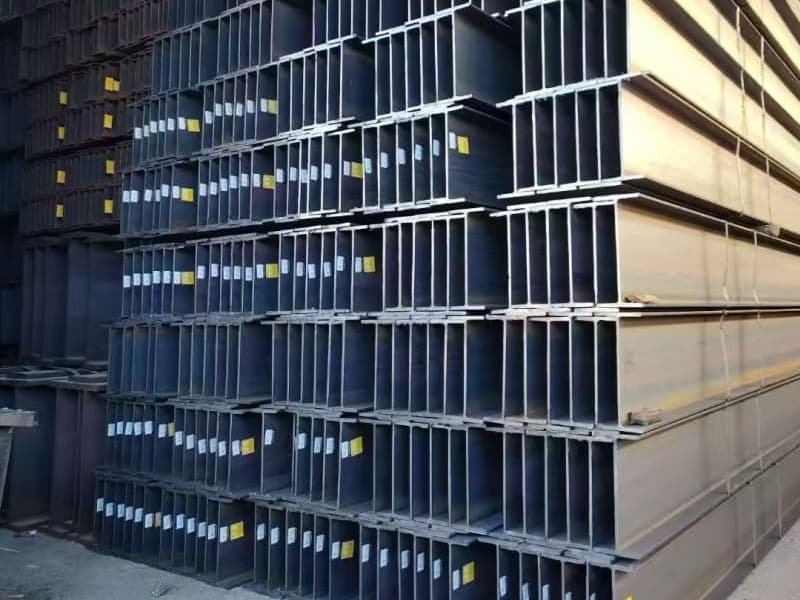
If you are in the construction or trading business, you know that sourcing steel from China is often the only way to stay competitive. The price gap between Chinese steel and local options in Southeast Asia, the Middle East, or Africa can be significant.
But let’s be honest: importing from overseas can be scary.
In my 15 years of experience at Ruicheng Steel, I have seen many international buyers make avoidable mistakes—from misinterpreting steel grades to getting stuck with delayed shipments.
I wrote this guide to walk you through the exact process of importing structural steel (H-beams, I-beams, Channels, Angles) from China in 2026. This isn’t just theory; this is based on how we successfully ship over 2 million tons of steel annually from our base in Tangshan.
Why Tangshan is Still the World’s Steel Capital
When you look for suppliers, location matters more than you think. You shouldn’t just look for “China”; you should look for Tangshan.
Located in the heart of Hebei province, Tangshan produces more steel than most countries do in an entire year. For you, this density means two things: Speed and Price.
At Ruicheng Steel, our facility is located in the Fengrun District, which is the epicenter of section steel production. Because we are surrounded by the raw material supply chain, our production costs are minimized, and we pass those savings to you.
Pro Tip: Always check the distance between your supplier and the nearest port. Our warehouse is only 120km away from Tianjin Port and Jingtang Port. This proximity saves you roughly $5–$10 per ton on inland transportation costs compared to suppliers located deep inland.
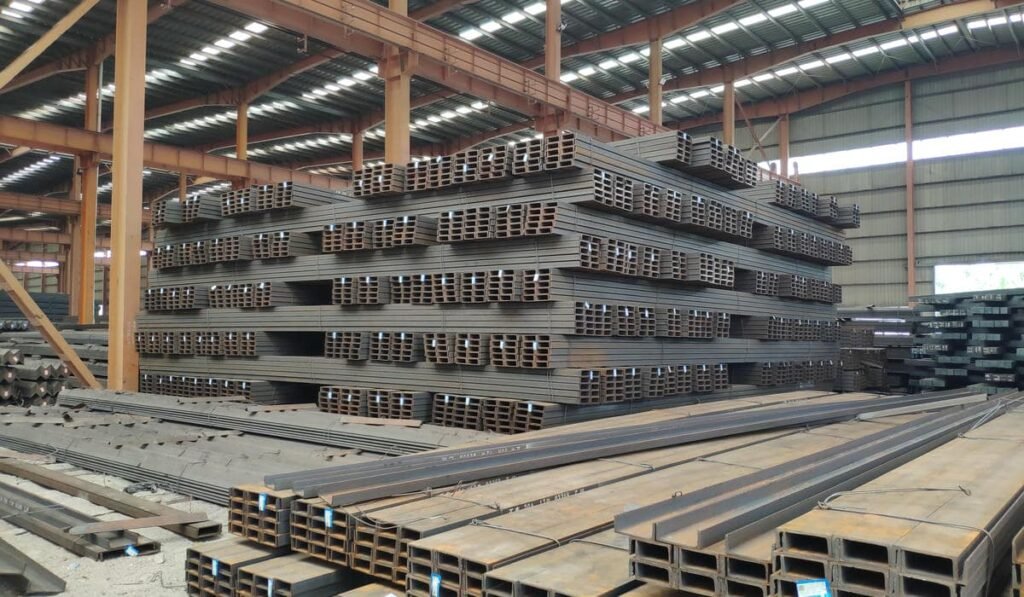
Step 1: Manufacturer vs. Trader – Which One Do You Need?
This is the most common question I get: “Are you a factory or a trading company?”
In 2026, the line is blurring. Pure factories often lack English-speaking staff and export licenses, while pure traders add a heavy markup.
The Hybrid Model is Best: Ideally, you want a partner like Ruicheng. We are a manufacturer-based supplier.
- We have our own production lines for specific profiles.
- We also hold massive stock (inventory) from other top mills like Jinxi or Tangsteel because of our bulk buying power.
This means you get factory-direct pricing with the service level of a professional trading house. We can consolidate H-beams, U-channels, and Galvanized pipes into a single container—something a single-product factory refuses to do.
Learn more about our company history and capability here
Step 2: Mastering “Negative Tolerance” to Save Costs
This is the biggest “secret” in the Chinese steel industry that new buyers often overlook.
In China, structural steel is often produced with negative tolerance (theoretical weight vs. actual weight).
- Actual Weight: The steel you physically weigh on a scale.
- Theoretical Weight: The standard weight listed in the GB or ASTM table.
At Ruicheng Steel, we offer custom rolling services. We can control the negative tolerance from 4% to 30% depending on your project needs.
Why does this matter?
If you are a stockist selling by piece (length), buying steel with a high negative tolerance (e.g., -15%) allows you to get more pieces per ton.
- Scenario: You buy 25 tons of H-beams.
- Standard: You get 100 pieces.
- With Tolerance Control: You might get 115 pieces for the same price.
This effectively lowers your unit cost. However, always ensure this meets your local structural safety standards. We clearly label all tolerances to ensure transparency.
Step 3: Navigating Quality Standards (GB vs. ASTM vs. EN)
Don’t assume “Steel is Steel.” A mismatch in standards is the #1 reason for customs rejection.
Since we established Ruicheng Steel in 2009, we have adapted our production to meet global standards. We don’t just sell Chinese GB standard steel; we regularly supply:
- European Standard: IPE, IPEAA, UPN, HEA, HEB (EN10025, S235JR, S355JR).
- American Standard: ASTM A36, A992 (Wide flange beams).
- Japanese Standard: JIS G3101 SS400.
My Advice: Send us your project drawings or exact spec sheet. Our engineers will match the closest Chinese equivalent grade if the exact foreign grade requires a huge MOQ (Minimum Order Quantity) to roll.
[Image Placeholder: Close-up photo of a steel beam end showing the heat number and standard tag. Alt Text: ASTM A36 steel H-beam showing heat number tag and quality inspection stamp.]
Step 4: Payment, Logistics, and Inspection
Once you are ready to order, follows these safety steps to protect your investment.
- Payment Terms: Standard practice is 30% T/T deposit and 70% balance against the Bill of Lading (BL) copy. For long-term partners, we can discuss LC (Letter of Credit).
- Inspection: Never be afraid to ask for a test. We welcome SGS, BV, or your own agent to inspect the goods at our Tangshan yard before loading. We believe trust is built on verification.
- Loading: Since we export huge volumes to Southeast Asia and Africa, we know how to nest the beams (interlocking them) to maximize space in the container. We can typically fit 25–27 tons in a 40ft container, reducing your average ocean freight per ton.
Frequently Asked Questions (FAQ)
1. What is the Minimum Order Quantity (MOQ) at Ruicheng Steel? Usually, we recommend ordering at least one 20ft or 40ft container (approx. 25-27 tons). This ensures you get the best ocean freight rate. However, for sizes we have in stock, we can support smaller trial orders (LCL), but shipping costs will be higher.
2. Can you provide “Mill Test Certificates” (MTC)? Yes, absolutely. Every batch of steel we ship comes with an original MTC. This document proves the chemical composition and mechanical properties (yield strength, tensile strength) match your requirements.
3. How long does delivery take? For standard sizes (like 150×150 H-beams or 100×50 Channels), we usually have stock ready to load within 7 days. For custom rolling orders, production typically takes 15–20 days. Shipping time depends on your destination port.
Conclusion
Importing structural steel from China doesn’t have to be a gamble. The key is finding a supplier who is transparent about quality, understands the nuances of standards like negative tolerance, and is located close to the port for fast shipping.
At Ruicheng Steel, we combine the production capacity of a major manufacturer with the service flexibility of a dedicated partner. We have been doing this since 2009, and we are ready to support your business growth.
Ready to get a precise cost estimate for your next project?
[Click here to Get a Free Quote Today] – Let’s build something strong together.